November 18, 2026 – On Saturday, Nov. 7, more than 2,000 people celebrated Black Men’s Wellness Day at the Earvin Magic Johnson Recreation Area in Los Angeles. It was a full day of free health screenings, a kids’ zone, a senior pavilion, live entertainment and food.
The festive L.A. event was the last of a multi-city tour organized by the African American Male Wellness Agency, the health and wellness arm of the National Center for Urban Solutions (NCUS).
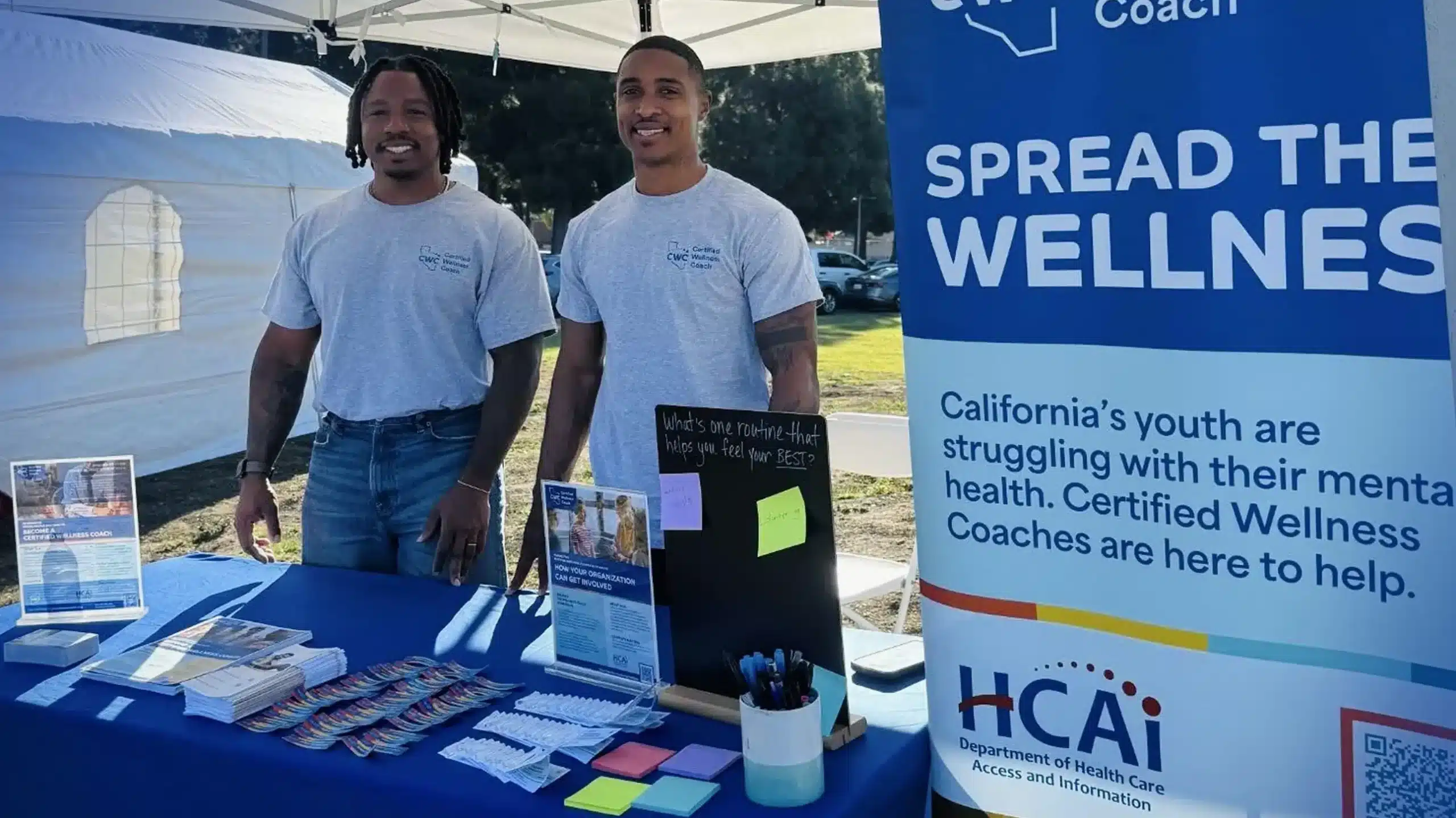
Our HCAI Community Engagement team had a booth at the event and distributed information about how to become a California Certified Wellness Coach.
Be Someone Young People Can Turn To
According to the Centers for Disease Control and Prevention’s 2025 Youth Risk Behavior Survey, more than one-third (34.3%) of Black high school students reported persistent feelings of sadness or hopelessness during the previous year. Among Black students experiencing these feelings, nearly 34% reported needing mental health counseling or therapy but not receiving it.
While Certified Wellness Coaches do not provide clinical therapy, they play an important role in supporting youth mental health. Working as part of a larger care team in schools, community organizations, and health care settings, they help children and young people develop coping skills, manage emotions and connect with additional resources when needed.
More Black men are needed in California’s youth behavioral health workforce. As a Wellness Coach, you can be a trusted adult who listens, understands, and helps young people take their next step.
A Certified Wellness Coach Found His Purpose
Darrell Ezell joined HCAI Community Engagement Manager Kevin Grant at our HCAI booth. Darrell knows firsthand what it’s like to struggle with feelings of anger, frustration, abandonment and sadness. At 16, he dropped out of high school and eventually found himself living on the streets of Los Angeles’ Skid Row.
Determined to turn his life around, he pursued an education and a career helping others facing behavioral health challenges. Now a father and a Certified Wellness Coach, he wishes he’d had a trusted adult to confide in when he was a teenager.
“We have to break that generational curse,” Darrell said. “Hurt people hurt people, but early intervention can help break that pattern.”
During the event, several men of varying ages inquired about the different pathways to becoming a Certified Wellness Coach.
“You don’t need an advanced degree or a clinical license to become a Certified Wellness Coach,” Kevin said. “If you’re already working with young people as a coach or a mentor, you may have some of the qualities that can help you succeed in this profession.”
Interested in making a difference in the lives of young people? Visit the Become a Certified Wellness Coach page to review eligibility requirements.