From bullying, to cell phone bans, to findings from the latest State of Teaching report, your May News Roundup is here.
Celebration Event Recap
Happy Mental Health Awareness Month!
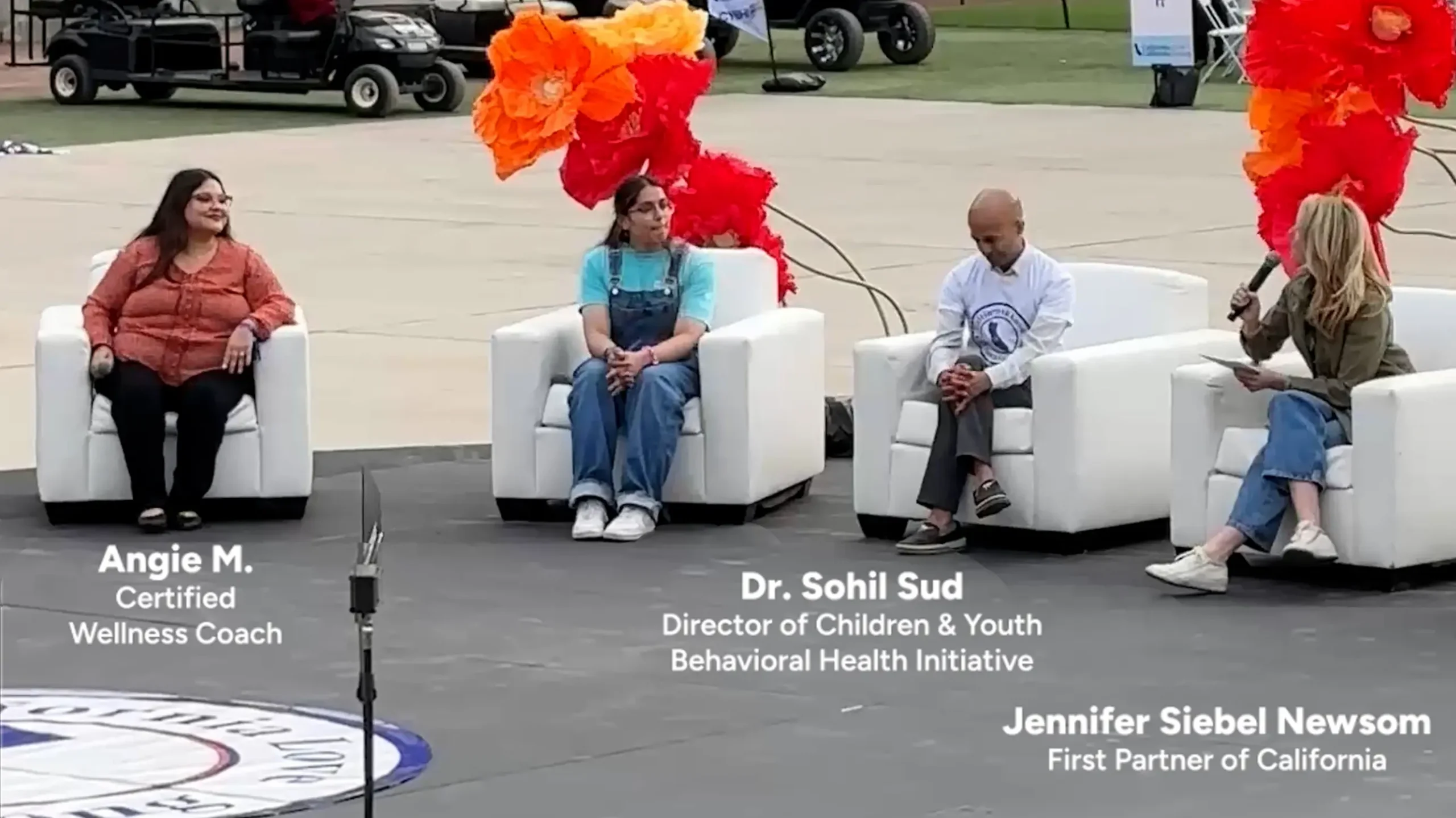
On February 19, 2026, the HCAI hosted a celebration marking the two-year anniversary of California’s newest behavioral health profession: the Certified Wellness Coach.
With nearly 650 people attending the hybrid event virtually and in-person, the day was filled with moving speeches and gratitude. Emceed by HCAI CWC Program Lead Sharmil Shah, we heard from HCAI Director Elizabeth Landsberg, Deputy Director of Health Workforce Development Libby Abbott, California Health and Human Services Secretary Kim Johnson, CYBHI Director Dr. Sohil Sud, and a special video message from First Partner Jennifer Siebel Newsom.
Guests also heard from employers, Certified Wellness Coaches, and youth from across the state, all with one clear takeaway: Coaches are making an impact on young lives, and the work they are doing matters.
Voices from California’s New Wellness Support Profession
Lupe Santos remembers a time when no one in her trauma-ridden community knew what a Certified Wellness Coach was. “Now, teachers call me before a crisis happens. Students know they have someone on campus who listens,” she said.
As a Student Support Specialist for Las Plumas High School in Oroville, Lupe is a California Certified Wellness Coach (CWC) working for Butte County Office of Education — a community still healing from the historic 2018 Camp Fire.
Lupe was one of eight CWCs across California who joined a webinar hosted by the California School-Based Health Alliance to share how they build trusted relationships with students and strengthen comprehensive wellness supports on campus.
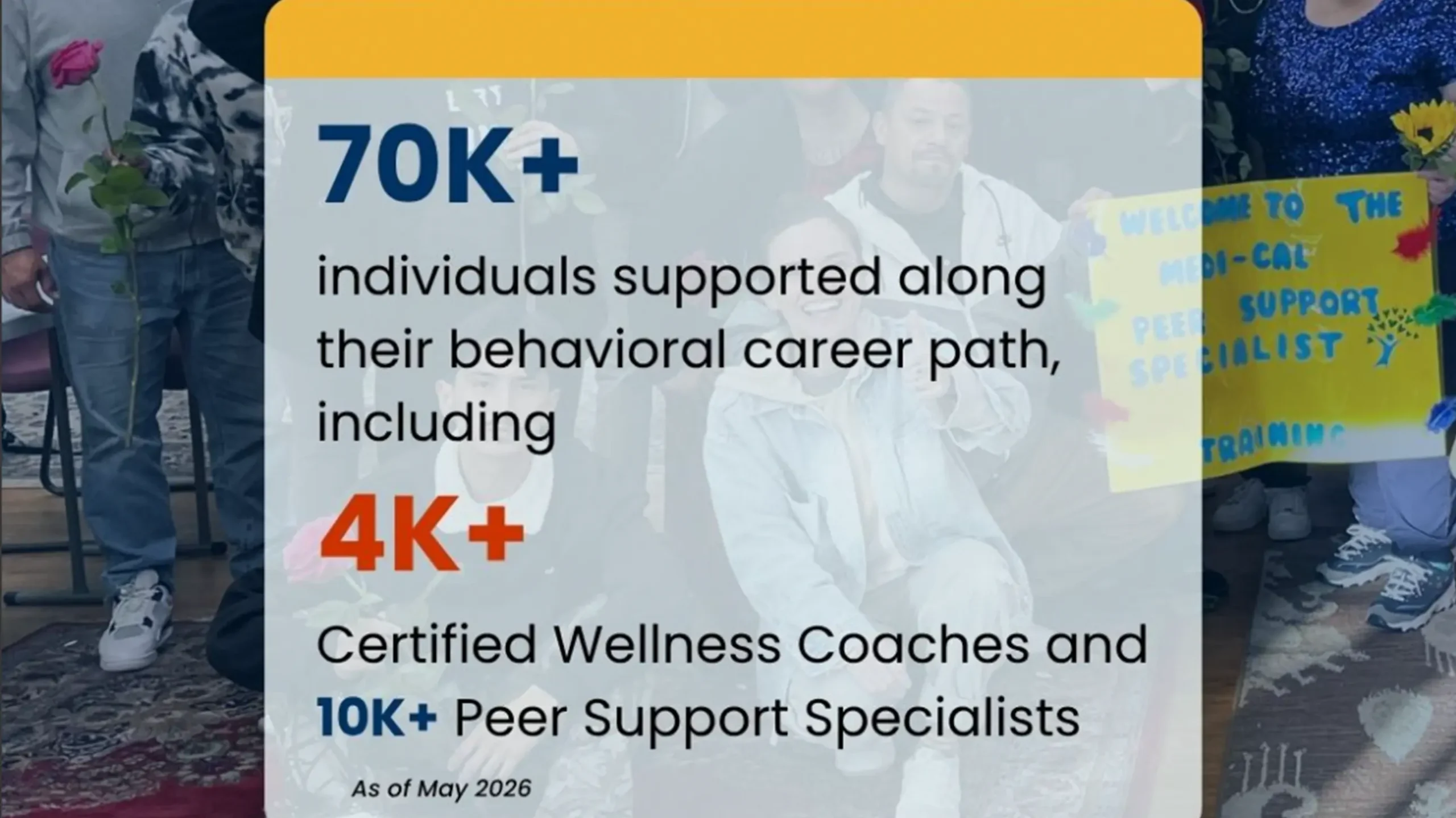
There are now more than 4,000 Certified Wellness Coaches throughout California, trained to support existing care teams in tackling the growing behavioral health challenges of children and youth. That number continues to grow thanks to Governor Gavin Newsom’s Master Plan for Kids’ Mental Health and the state’s Children and Youth Behavioral Health Initiative (CYBHI), which funded HCAI to develop and administer this profession.
CWCs provide non-clinical services — including wellness promotion, screening, care coordination, individual and group support, and crisis referral — embedded within school and community-based care teams under the guidance of credentialed personnel and clinicians.
Building Trust and Strengthening Connections
During the webinar, Wellness Coaches described their role as deeply relational and grounded in everyday presence — building trust long before a crisis occurs.
“It’s really important that we introduce ourselves in a formal way — why I’m here, how I can help, what services I provide,” said Sakina Ali, Certified Wellness Coach and Wellness Liaison at Santa Clara County Office of Education.
That consistent visibility creates pathways for students to seek support before challenges escalate. CWCs often become a first point of connection, helping students access school-based health services through warm hand-offs and follow-up.
“I stand at the gates every morning greeting families, high-fiving students, and making sure they see a familiar face. When a tough moment happens later in the day, they already know me and feel safe walking into the Wellness Center,” said Jasmin Montalbo, a CWC and Student Support Specialist at Ceres Unified School District in Stanislaus County.
Beyond individual interactions, CWCs are contributing to a broader cultural shift. Through groups, events, and daily presence, they help normalize conversations about well-being.
“Sometimes you don’t see change right away — it’s happening,” said Karl Travis, CWC at Oroville High School. Gloria Cruz, CWC at Westport Elementary in Ceres Unified, agreed: “This is an evolving journey — and it’s exciting. Wellness is becoming part of school culture.”
Click here to watch a recording of the webinar or here to view tips for new Certified Wellness Coaches.
April News Roundup
From gambling addictions in youth to the recent Meta and Google social media harms trial, click through to read the April roundup of behavioral health news you can use.
Students Take Action on Mental Health
On March 21, over 170 Bay Area teens joined together to participate in the University of California, San Francisco’s (UCSF’s) Science and Health Education Partnership (SEP) final Teen Wellness Summit. The event was part of UCSF SEP’s Teen Wellness Connection (TWC) program. The summit agenda included keynote speakers, breakout sessions, a resource fair, and a closing celebration of student changemakers. The event created space for conversations about something that doesn’t get talked about enough: what it actually feels like to be a young person navigating mental health today.
The Certified Wellness Coach (CWC) Community Engagement Team was there and participated in the summit’s resource fair. The CWC table created an opportunity for teens to learn about the program and what a future career in mental health could look like. Teens were invited to write anonymously what they wished more people understood about teen mental health. Their responses were honest and unfiltered.

“It’s not just a ‘phase.'”
“Just because someone has it ‘worse’ doesn’t mean your problems don’t matter.”
“I wish there were more people talking about it.”
Rachel Harris, Academic Coordinator at UCSF SEP, spoke with the CWC Community Engagement Team and shared highlights of what she has learned over the past four years coordinating TWC. She shared that “the motivating thing is just knowing that this event is so exciting and energizing, but also that we’re changing the lives of the teens who are in our program and the lives of the 170 attendees who show up on this day.”

Year after year, that exchange runs in both directions. “Every year our presenters come back, they say they learned something new,” Rachel reflected. “It’s been a sharing experience, not just UCSF presenters giving information to teens, but also teens giving back to our presenters.”
This is a reminder that young people aren’t passive recipients of information about their own well-being. They have insights, experiences, and perspectives that are worth listening to. What they need is someone willing to have that two-way conversation — a trusted adult with the skills to actually show up for them, not just with a referral, but with presence, tools, and a genuine understanding of youth wellness.
That’s exactly what CWCs are trained to do. The students who showed up to this summit were passionate, informed, and already thinking about how to support the people around them. Today, they are advocates, providing a window into teen mental health. Tomorrow, they are the future of the behavioral health field.
If you care about youth mental health, consider becoming a CWC. The next generation isn’t waiting.
If you have an upcoming event our CWC Community Engagement Team could attend, please send us an invite and share event details at [email protected].
Two Years Strong
Two years ago, California made a bold investment in the mental health and wellness of children and youth. The Certified Wellness Coach profession was born.
Today, there are over 4,000 Wellness Coaches in the state, working at over 745 sites and serving hundreds of communities. 600 scholarships have gone to future Wellness Coaches, and $127 million has been awarded in school and employer grants to help grow their Wellness Coach workforce.
Over 176,000 students in our state are already receiving support from Wellness Coaches, meeting youth where they are. And we are just getting started. Thank you to everyone who has been a part of this important work. Onward!
First Partner Jennifer Siebel Newsom Celebrates Certified Wellness Coaches
On February 19, 2026, mother of four and First Partner Jennifer Siebel Newsom spoke to Certified Wellness Coaches in honor of a huge milestone: our 2-year anniversary!
“So, for me, as a mom of four, protecting our kids’ well-being is the most important thing in my life. And at the end of the day, if we’re going to raise a generation of children who are healthy in mind, body, and spirit, we have to ensure that the world around them supports that. So to the Certified Wellness Coaches, thank you so much. Your work matters more than you know.”
Watch her full message to all Certified Wellness Coaches in the video, and if you’re curious about becoming or hiring a Certified Wellness Coach, click here to find your path!
Certified Wellness Coach Speaks at Governor’s Convening
Now, more than ever, California’s boys and young men need our support.
Nearly 1 in 4 young men report having no close friends.
Men are over 3x more likely to die from drug overdose.
And in California, men die by suicide at 3.6x the rate of women, yet are far less likely to seek help.
These are just a few reasons why Governor Gavin Newsom and First Partner Jennifer Siebel Newsom convened national and state leaders in Sacramento on March 25. Their goal? To advance solutions for boys and young men.
A familiar face, Sacramento County Office of Education Certified Wellness Coach Jordan Coleman, spoke at the Governor’s event.
“During previous generations the ‘one size fits all’ method has been accepted but it hasn’t worked,” said Coleman. “We have the knowledge and data to clearly see that we are failing our young men. Our youth need leaders who are willing to hear them, understand them, and meet them where they are.”
Click here to read the full story.
March News Roundup
Your March edition of the Monthly News Roundup is here!
Check back each month for more behavioral health news you can use.
Celebrating Two Years of Certified Wellness Coaches in California
Two years ago in February, cawellnesscoach.org activated our “Get Certified” button for the very first time.
California was the first state in the nation to formally invest in a Certified Wellness Coach workforce to address the deficit in youth mental health opportunities head-on.
Today, over 4,000 Wellness Coaches have been certified. Thank you to every member of this new behavioral health workforce. You are increasing access to preventative care, and helping youth, families, and communities thrive!
Stay
Updated
HCAI partners with California Community Colleges, California State Universities, and private nonprofit universities whose curricula meet all the requirements for a student to apply for a Wellness Coach certification upon graduation.
Stay up to date with the latest details about the program, timelines, and grant opportunities.
Stay
Updated
Stay up to date with the latest details about the program, timelines, and grant opportunities.